
Have you ever produced or reviewed a report in your business only to find that the data was all wrong? If you have, you are not alone. Around 77% of organisations say the condition of their data is average or worse. The topic being discussed here is data quality management, which is crucial for data-driven decision making, operational efficiency and the adoption of AI. In this article we will discuss data quality, the causes of poor data quality and provide strategies for you to effectively manage data quality in your organisation.
The 6 Dimensions of Data Quality
Data quality is a measure of how fit-for-purpose a dataset is for use in an organisation. Overall data quality is measured across 6 dimensions, including: accuracy, completeness, consistency, timeliness, validity and uniqueness.
- Accuracy: Accuracy means data correctly reflects facts and events. It ensures that the stored information reconciles with the real world.
- Completeness: Completeness ensures all required data fields are filled, providing full information needed for analysis or processing.
- Consistency: Consistency is defined as the uniformity of data throughout various systems, records, or formats. It ensures that identical information remains constant regardless of its storage location or format.
- Timeliness: Timeliness means that data is up to date and available when required for use in decision making or processes.
- Validity: Validity refers to how well data meets specific formats, rules, and business requirements. For example, dates being in date format and business categories being spelled or coded correctly.
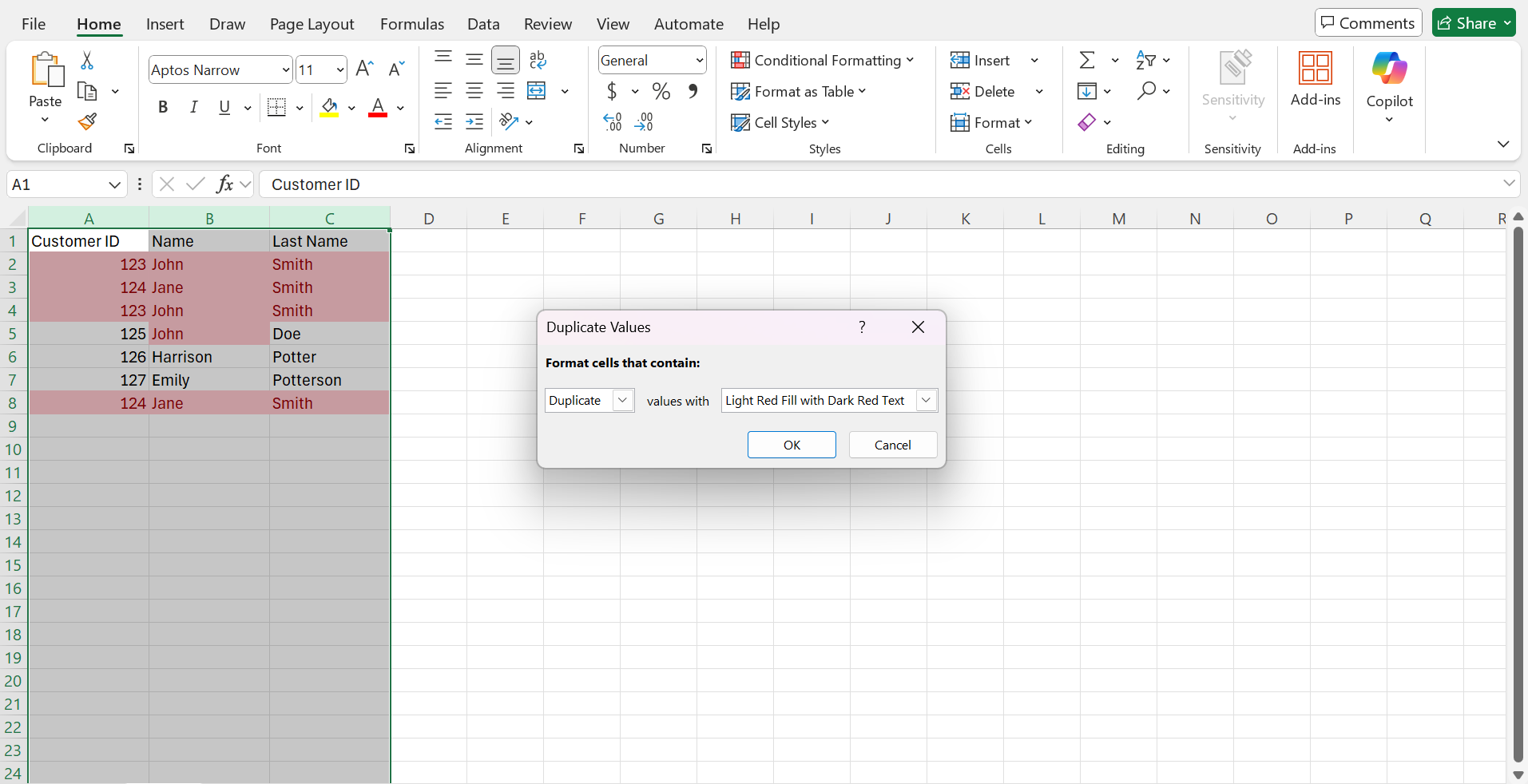
- Uniqueness: Uniqueness means no uncontrolled duplication of records in datasets. For example, unique customer identifiers in a customer dataset must all be distinct.
What Causes Bad Data Quality?
Bad data quality can compromise decision-making and workflows in any organisation. Before examining strategies to improve data quality, it is important to understand two main examples of how bad data quality can arise. Human error and data integration issues.
Humans inevitably make more errors during repetitive tasks such as data entry. Without any controls, data that is entered manually into applications such as CRMs is bound to have issues such as typos and mislabelling.
Data integration errors often cause data quality problems by incorrectly altering data during automated sourcing, transformation, or loading. For instance, using a REST API to load data from business applications can miss or duplicate data records even if the query looks properly configured.
Data Quality Management Strategies
Strategies to effectively manage data quality include data governance, documentation, training, data validation and monitoring.
Data Governance
Establishing data governance policies promotes consistency in the management and oversight of data across an organisation. These policies should clearly define roles, responsibilities, standards, and procedures relevant to data management. By implementing well-defined guidelines for the collection, storage, processing, and dissemination of information, organisations can achieve substantial improvements in data quality over time.
Documentation
Documenting data sources, workflows and systems allows users to have context for the information they are handling. These records should specify data collection processes, data lineage, data transformations and error identification. Careful documentation is essential for accuracy, completeness and consistency of data.
Training
Training staff in data quality management ensures they know how to collect and manage information correctly, which promotes accuracy, completeness and consistency of data. Regular workshops on data collection and error detection help maintain high standards in data handling processes.
Data Validation
Ensuring the accuracy and integrity of information is crucial in any system. Implementing robust checks and balances can help maintain the quality of the data being processed. Data validation rules are system constraints that prevent users from entering unexpected values. Common examples include requiring valid date formats, picklists, range constraints and prevention of duplicates.
Monitoring
Regularly reporting on the core dimensions of data quality (accuracy, completeness, consistency, timeliness, validity and uniqueness) is key for ongoing management of data quality. This enables the early detection of issues before they turn into an expensive data cleansing exercise.
These steps all have a positive influence on each dimension of data quality (accuracy, completeness, consistency, timeliness, validity and uniqueness). This leads to better overall data quality, which then enables data-driven decision making and better efficiency.
Sidenote for Data Quality and AI
As a sidenote, focusing on good data quality isn’t just for reporting. It is also crucial for the successful adoption of AI in organisations. AI models require good data for training; without it they are likely to learn the wrong lessons and make incorrect decisions. Gartner actually forecasts that “through 2026, organisations will abandon 60% of AI projects unsupported by AI-ready data”. So, organisations with good data quality will stay ahead of the curve and will have a solid competitive advantage with more AI.
Conclusion
Overall, data quality is a determinant factor in the success of an organisations ability to make data driven decisions, operate efficiently and adopt artificial intelligence. Data quality is measured across its 6 dimensions, including: accuracy, completeness, consistency, timeliness, validity and uniqueness. Each dimension has an important role in the usability of data. In terms of managing this, organisations can use several strategies including data governance, documentation, training, data validation and lastly monitoring. Ultimately, data quality management cannot be ignored; having good data is becoming increasingly more of a competitive advantage due to its importance in analytics and artificial intelligence.
Author bio: Lachlan is a Consultant and Director at On Report. He is genuinely passionate about helping organisations use their data for better decision making.
Lachlan Brien
I look forward to seeing how these developments will improve service levels and customer satisfaction in the freight industry!
Comments are closed.